

The Awakened Dust
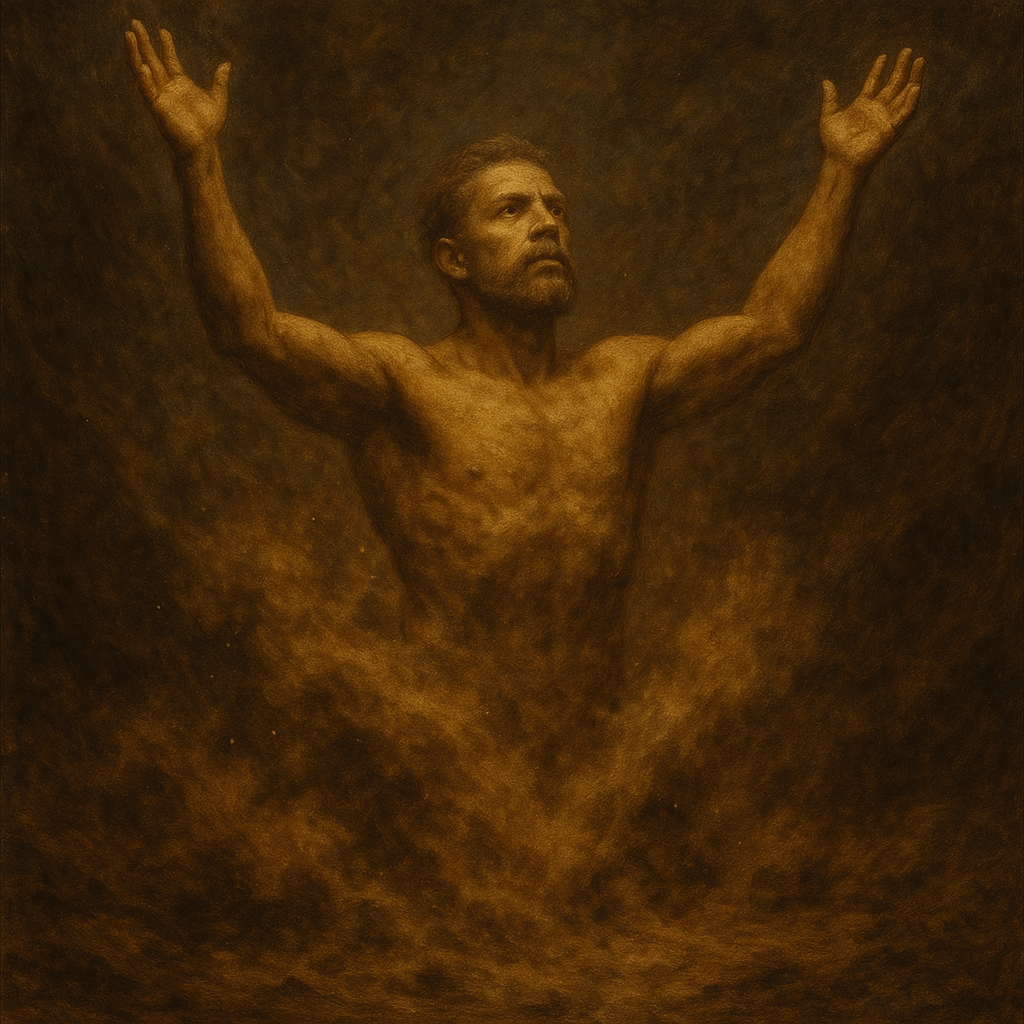
The Awakened Dust
We were told we came from dust — but never told what that dust contains.
Not emptiness. Not weakness. But memory — compressed, layered, and guarded.
To awaken is not rebellion. It is recognition.
Recognition of what was shaped… and what was suppressed.
POWER, RELIGION & STRUCTURE IN NIGERIA: A FORENSIC VIEW
| Official Narrative | Forensic Reality |
|---|---|
| Religion spread purely through faith and guidance | Religion often expanded alongside political conquest, trade routes, and elite control systems |
| Religious institutions unify societies | They can also reinforce hierarchy, control knowledge, and regulate behavior |
| All violence is external extremism | Some violence emerges from political misuse of religious identity |
HISTORICAL EXPANSION & POWER
The Sokoto Caliphate (1804–1903), led by Usman dan Fodio, was both a religious and political revolution.
It restructured Northern Nigeria into one of the largest pre-colonial states in Africa, but like many empires, it operated within systems that included hierarchy, tribute, and forms of servitude.
THE POLITICS OF IDENTITY
Religious identity in Nigeria has often been used as a political tool— mobilizing populations, shaping voting blocs, and influencing regional power.
Conflicts frequently labeled “religious” are often rooted in land, governance failure, and economic inequality.
EXTREMISM VS STRUCTURE
Groups like 0 represent extremist distortions, not the entirety of a faith tradition.
Their rise is linked to governance gaps, poverty, and regional instability, not simply doctrine alone.
EDUCATION & CONTROL
Northern Nigeria faces deep educational disparities, including the Almajiri system— where millions of children receive limited formal education.
This is less about religion itself, and more about structural neglect, policy failure, and historical underinvestment.
The system was never just spiritual. It was administrative, political, and strategic.
TEXTS, INTERPRETATION & HUMAN CONTROL
INTERPRETATION, NOT JUST TEXT
Religious texts across all traditions—Islam, Christianity, and others— have undergone centuries of interpretation.
Meaning is shaped not only by scripture, but by scholars, rulers, and institutions who control interpretation.
HISTORICAL CROSS-INFLUENCE
Many religious narratives share parallels with older civilizations— including Mesopotamian, Persian, and early Semitic traditions.
This reflects cultural transmission, not simple copying, but it reveals that belief systems evolve over time.
SCIENCE & BELIEF
Tension between scientific discovery and religious interpretation has existed across civilizations—not unique to any one faith.
The real conflict is often between knowledge systems, not between truth and falsehood.
MECHANICS OF HISTORICAL ERASURE
WHAT GETS REMEMBERED — AND WHAT DOESN’T
History is not neutral. It is curated.
Colonial archives, state narratives, and institutional education determine which stories survive—and which are buried.
METHODS OF CONTROL
- Damnatio memoriae (erasing individuals or events)
- Selective education systems
- Religious authority monopolies
- Political rewriting of historical events
EVIDENCE SOURCES
Hidden or under-discussed perspectives are often found in:
- Colonial administrative archives
- Oral histories across Nigerian ethnic groups
- NGO conflict reports
- Academic field research outside mainstream curricula
Awakening is not about rejecting everything.
It is about seeing clearly—without fear, without conditioning, and without surrendering your mind.
You were never just clay. You were awareness shaped into form.
"This is not the end. It is the beginning of clear sight."