

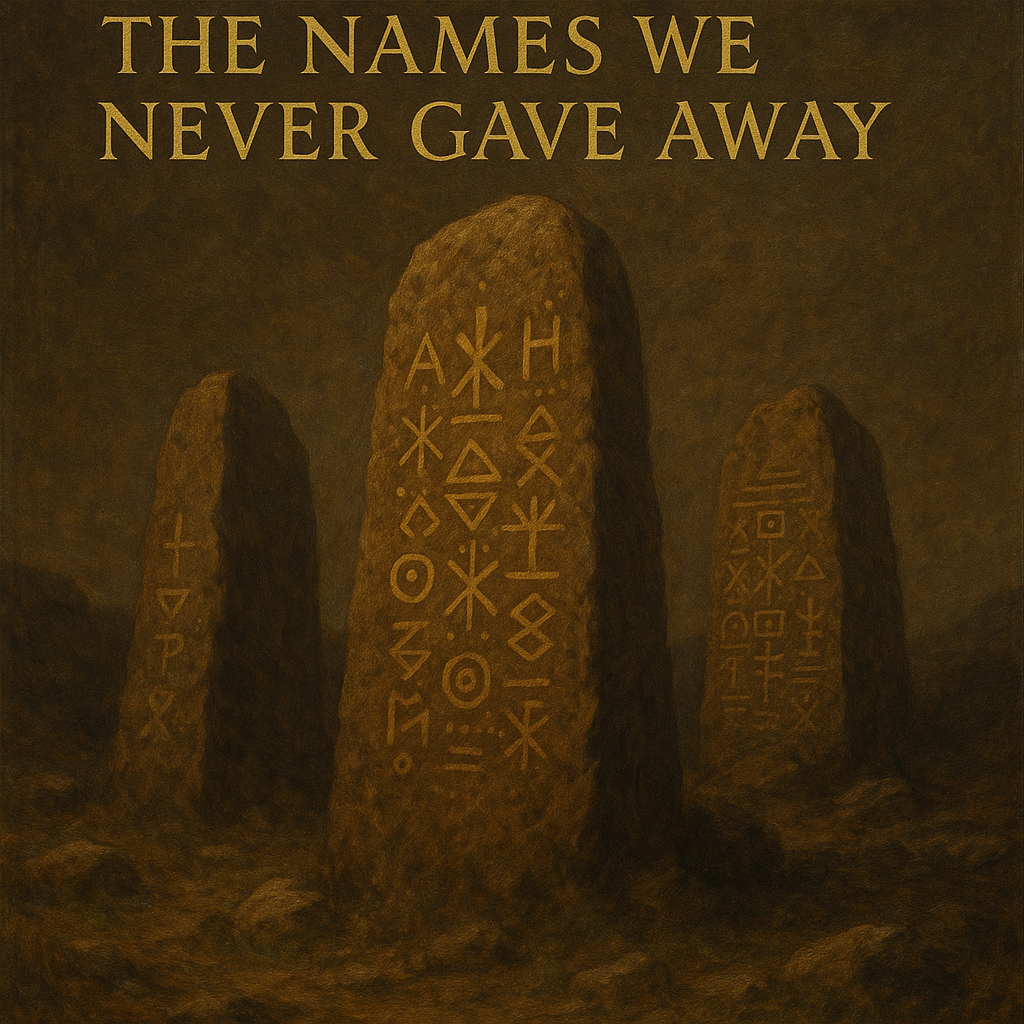
The Names We Never Gave Away
THE VEIL TORN ASUNDER
A Forensic Reconstruction of Faith, Power, and Memory
Every religion begins with a claim of revelation. Every revelation emerges within a human context—political, economic, and social.
The question is not whether belief is real. The question is: who shaped the narrative—and who benefited?
I. THE OFFICIAL STORY VS. THE SHADOW RECORD
| Official Narrative | Shadow Context (Power Analysis) |
|---|---|
| Religion spreads through faith and conviction | Religion often spreads through trade, political alliances, and sometimes conflict |
| Conversion is purely spiritual | Conversion can be influenced by taxation systems, protection structures, and social mobility |
| Sacred law reflects divine will | Legal systems often consolidate authority and regulate society |
| Unity under faith | Internal divisions, sectarian conflicts, and power struggles frequently emerge |
II. HISTORICAL RECONSTRUCTION: NORTHERN NIGERIA
The expansion of Islam into what is now Northern Nigeria occurred over centuries—through trade routes, scholarly networks, and later, military campaigns such as the early 19th-century jihad led by Usman dan Fodio.
CRITICAL HISTORICAL FACTORS:
- Pre-existing Hausa kingdoms already had complex political systems before Islamic reform movements
- The Sokoto Caliphate became one of the largest political entities in West Africa
- Enslavement existed both before and during the Caliphate, but was expanded and systematized under state structures
- Islamic scholarship coexisted with political authority—often reinforcing it
- Indigenous belief systems were displaced, merged, or suppressed in varying degrees
III. NARRATIVE DISSONANCE
Mainstream View:
Islam brought literacy, governance systems, and trans-Saharan connectivity.
Subaltern View:
Some communities experienced cultural loss, forced restructuring of identity, and incorporation into new power hierarchies.
IV. THE POLITICS OF MEMORY
No dominant system preserves every truth. What is remembered is often what stabilizes authority. What is forgotten is often what threatens it.
This applies not only to Islam—but to Christianity, colonialism, and even modern nation-states.
V. SCIENCE VS. SCRIPTURE (WITHOUT DISTORTION)
Scientific understanding of the universe is based on observation and revision. Religious texts are based on interpretation and tradition.
- Modern cosmology estimates the universe at approximately 13.8 billion years old
- Human evolution is supported by fossil and genetic evidence
- Religious cosmologies are symbolic frameworks, not scientific models
VI. HISTORIOGRAPHICAL CRITIQUE
Many claims about religion—both positive and negative—are shaped by:
- Colonial reinterpretation of African history
- Modern political agendas
- Selective use of sources
- Emotional narratives replacing verifiable data
A forensic approach requires:
- Separating documented evidence from rhetoric
- Comparing multiple sources, including marginalized voices
- Identifying who benefits from each version of history
VII. THE REAL AWAKENING
Awakening is not rejecting belief. Awakening is understanding its construction.
Not every structure of faith is oppression. Not every critique is truth.
"Some truths are not shouted. They are uncovered."